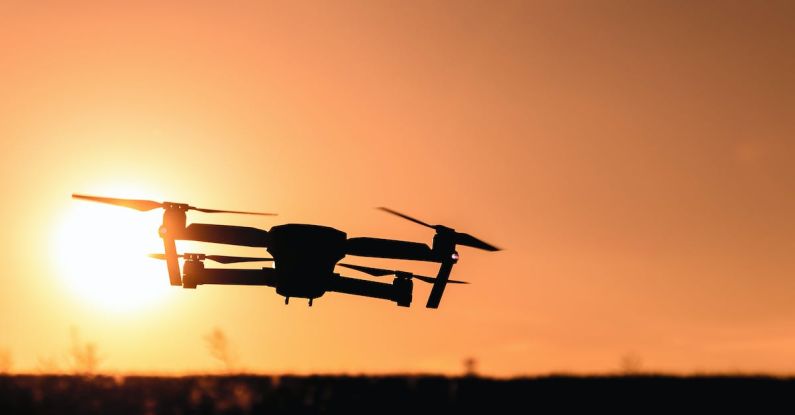
How Are Drones Influencing Agricultural Practices?
Drones: Transforming Agriculture
In recent years, the integration of technology in agriculture has revolutionized traditional farming practices. One such technological advancement that has significantly impacted agriculture is the use of drones. These unmanned aerial vehicles have swiftly carved out a niche for themselves in the agricultural sector, offering farmers innovative solutions to enhance crop management, yield optimization, and overall farm efficiency. Let’s delve into the realm of how drones are reshaping agricultural practices and bringing about a new era of precision farming.
Enhanced Crop Monitoring
Drones equipped with high-resolution cameras and sensors are proving to be invaluable tools for farmers in monitoring crop health and identifying potential issues in real-time. With the ability to capture detailed aerial images of fields, drones enable farmers to gain a comprehensive overview of their crops, including areas that may be difficult to access on foot. This level of detailed monitoring allows for early detection of crop diseases, pest infestations, nutrient deficiencies, and other issues that could affect crop yield. By pinpointing these problems early on, farmers can take timely corrective measures to prevent widespread damage and ensure optimal crop health.
Precision Agriculture and Data-driven Decision Making
The adoption of drones in agriculture has paved the way for precision agriculture, a data-driven approach that focuses on optimizing inputs and resources to maximize crop yields while minimizing waste. Drones play a crucial role in collecting vast amounts of data, such as aerial imagery, multispectral images, and thermal data, which can be analyzed to generate valuable insights for farmers. By leveraging this data, farmers can make informed decisions regarding irrigation, fertilization, pest control, and other agronomic practices. This targeted approach not only increases the efficiency of resource utilization but also leads to higher productivity and profitability for farmers.
Efficient Crop Spraying and Monitoring
Drones equipped with precision spraying systems offer a more efficient and environmentally friendly alternative to traditional crop spraying methods. By precisely targeting areas that require treatment, drones can apply pesticides, herbicides, and fertilizers with increased accuracy, reducing chemical usage and minimizing the impact on the environment. Additionally, drones can cover large areas of farmland in a fraction of the time it would take traditional machinery, making crop spraying faster and more cost-effective for farmers. The ability to monitor the effectiveness of spraying operations through drone-collected data further enhances the efficiency of crop management practices.
Crop Mapping and Field Analysis
Drones are invaluable tools for creating detailed maps of farmland and conducting in-depth analysis of field conditions. By utilizing drone-generated aerial imagery and mapping software, farmers can create high-resolution maps of their fields, highlighting variations in soil types, moisture levels, and crop health. This information enables farmers to implement site-specific management strategies, such as variable rate application of inputs, tailored to the specific needs of different areas within a field. By customizing farming practices based on accurate field data, farmers can optimize crop yields and improve overall farm productivity.
Challenges and Future Outlook
While drones have undoubtedly revolutionized agricultural practices, their widespread adoption still faces certain challenges. Regulatory restrictions, privacy concerns, initial investment costs, and the need for specialized training are some of the barriers that farmers must navigate when integrating drones into their operations. However, as technology continues to advance and drone capabilities evolve, these challenges are gradually being addressed, opening up new possibilities for the future of agriculture.
Looking ahead, the integration of drones in agriculture is poised to continue reshaping the way farmers approach crop management and farm operations. With ongoing advancements in drone technology, including improved sensors, longer flight times, and enhanced data processing capabilities, the potential for drones to further optimize agricultural practices is vast. As farmers embrace these innovative tools and harness the power of data-driven decision-making, the agricultural industry is set to undergo a transformative shift towards greater sustainability, efficiency, and productivity.
In conclusion, drones have emerged as game-changing tools that are revolutionizing agricultural practices and driving the industry towards a more sustainable and efficient future. By leveraging the capabilities of drones for enhanced crop monitoring, precision agriculture, efficient spraying, and field analysis, farmers can unlock new opportunities for optimizing crop yields and improving overall farm management. As the agricultural sector continues to embrace technological innovations, the role of drones in shaping the future of farming is set to become increasingly prominent, paving the way for a new era of precision agriculture.